
Letters and permutation
Finite elements can be rearranged into many sequences, linking disciplined structure with open-ended possibility.
The Institute’s intellectual roots include Abraham Abulafia, musical permutation, mathematics, and interdisciplinary inquiry. The Universal Language Room has also been examined in a published 2020 peer-reviewed study. This page keeps inspiration, analogy, and measured evidence clearly separated.
In 2020, the Journal of Interprofessional Education & Practice published “Breaking the ice: Use of music improvisation to facilitate interprofessional communication,” with Jason Caplan among the authors.
The Universal Language Room was used as an interprofessional-education icebreaker. Students’ written reflections repeatedly mentioned initial skepticism, nonjudgment, unity, enjoyment, and connections to their professional lives. The authors reported that the experience helped students understand and appreciate key interprofessional-education objectives and suggested ULR could be a useful model for promoting communication across disciplines.
This was a small qualitative pilot. It supports careful claims about this educational use and participant reflections; it does not establish broad therapeutic, medical, or causal outcomes.
Abraham Abulafia was a 13th-century Jewish mystic whose writings developed contemplative practices involving Hebrew letters, vocalization, breath, attention, and permutation. ULR draws from the generative idea that a small set of elements can produce many meaningful arrangements.
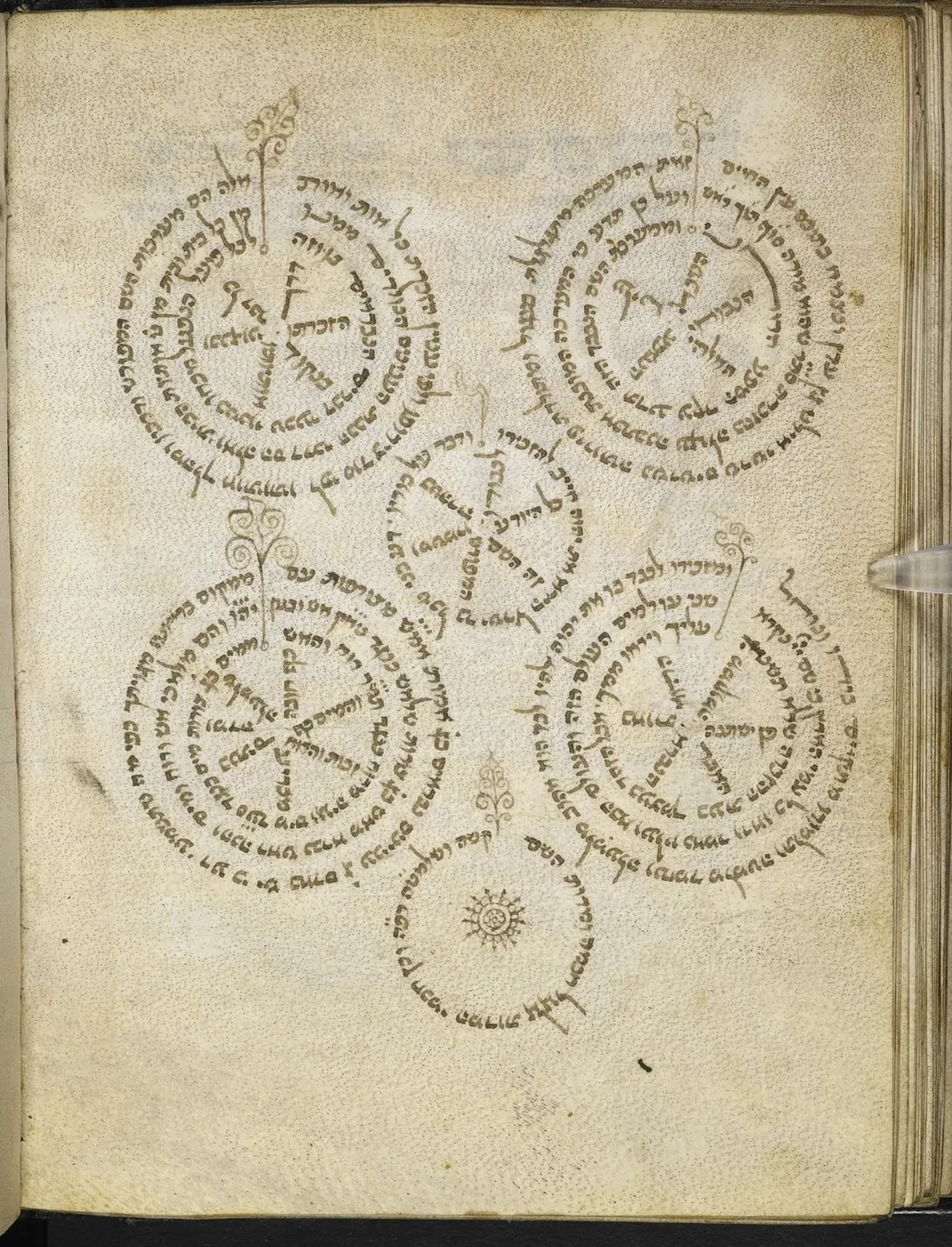
Finite elements can be rearranged into many sequences, linking disciplined structure with open-ended possibility.
ULR translates that generative logic into simple musical phrases participants can hear, answer, vary, and build together.
A 2025 paper by Stephen Wachtel and Jason Caplan explores conceptual parallels among Kabbalistic letter permutations, musical-note permutations, DNA base arrangements, mathematics, and descriptions of vibration.
It develops an interdisciplinary analogy across symbolic systems, music, genetics, mathematics, and cosmological ideas.
Conceptual similarity is not evidence that Kabbalah predicts genetics, that music changes DNA, or that ULR produces medical or mystical outcomes.
The Institute’s history includes documented programs, a peer-reviewed educational pilot, public scholarship, and spiritual inspiration. Those categories should not be blended into one kind of proof.
Program origin, public collaborations, archived events, publications, and recognitions can be described from records.
Research claims should stay within the population, setting, method, and findings of the actual study.
Spiritual, philosophical, and interdisciplinary sources can shape the method without being presented as scientific proof.